
Quick answer
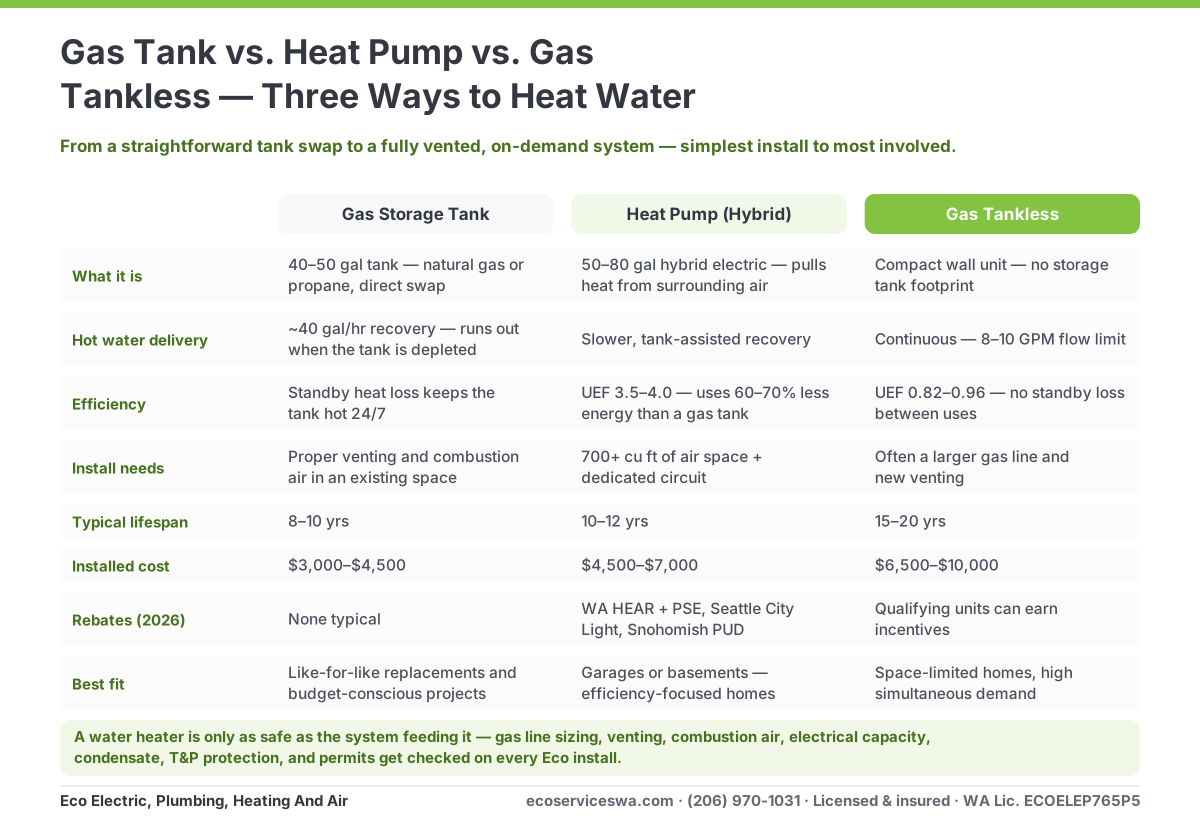
A heat-pump (hybrid) water heater is the most efficient option and earns the largest Washington rebates, but it needs space and a moderate budget. A tankless heater gives endless hot water and frees up floor space at a higher install cost. A standard tank is the cheapest and simplest to replace. The right choice depends on your space, budget, and household hot-water demand.
- Most efficient + biggest rebates: heat-pump (hybrid) — needs space and reasonably mild surrounding air.
- Endless hot water + space savings: tankless — higher upfront, great for larger households.
- Lowest upfront + simplest swap: standard tank — shorter lifespan and higher running cost.
- Heat-pump and qualifying tankless units can earn PSE and federal incentives.
Use this guide when
Your water heater is leaking or past 10-12 years, you're remodeling, or you're weighing a rebate-eligible upgrade against a like-for-like replacement.
What actually drives the decision
Space and location, household size and peak demand, fuel availability (gas vs electric), and how long you'll stay in the home. Efficiency upgrades pay back over years, not weeks.
Compare your options
Choose a heat-pump (hybrid) water heater when
You have a garage, utility room, or basement with enough air volume and mild temperatures, you want the lowest operating cost, and you want the largest rebates. It's the centerpiece of an electrification plan.
Choose tankless when
You want endless hot water, you're tight on space, or a large household outruns a tank at peak times. Gas tankless needs proper venting and gas supply; electric tankless needs significant electrical capacity.
Choose a standard tank when
Budget is the priority, the space won't suit a heat pump, or you need a fast, straightforward replacement. Modern tanks are reliable — just less efficient and shorter-lived than the alternatives.
What does each option cost installed in the Seattle area?
Ranges match Eco's published Puget Sound water-heater cost guide — costs, capacities, and lifespans are typical as of 2026 and vary by manufacturer, local code, and site conditions.
| Option | Typical installed range | What that covers |
|---|---|---|
| Gas storage tank (40–50 gal) | $3,000–$4,500 | Like-for-like swap in an existing space — typical lifespan 8–10 years, ~40 gal/hr recovery. |
| Heat pump / hybrid (50–80 gal) | $4,500–$7,000 | Before rebates — WA HEAR, PSE, Seattle City Light, and Snohomish PUD incentives can take a meaningful bite out of this. |
| Gas tankless (on-demand) | $6,500–$10,000 | Includes typical venting and gas-line work — longest service life of the three. |
What changes the price
- Venting and combustion air — correct vent type, slope, and termination clearance
- Gas line sizing — undersized lines are the most common cause of tankless units failing to reach rated output
- Electrical and panel capacity — heat pump models need a dedicated circuit
- Condensate drainage — high-efficiency and tankless units produce acidic condensate that needs a proper, neutralized drain
- T&P valve and expansion tank on closed systems
- Manufacturer clearances, air volume, and seismic or wall-mounting requirements
- Water quality — untreated hard water scales heat exchangers and tanks, and can void some warranties
- Permits and final inspection
Ranges are representative Seattle / Puget Sound installed prices, not a quote — your home's specifics set the real number. Eco gives you an upfront price before any work begins.
How do they work differently?
Gas storage tank — the standard replacement
A 40–50 gallon atmospheric or power-vent tank on natural gas or propane — a direct swap in an existing closet or utility space, and the simplest install of the three. Strong recovery (roughly 40 gallons per hour, with a 60–70 gallon first-hour rating) suits large households, and standing-pilot models keep working in a power outage. The trade-offs: hot water runs out once the tank is depleted, standby heat loss keeps the tank hot 24/7, and it needs proper venting and combustion air.
Heat pump (hybrid) — the efficiency pick
A 50–80 gallon hybrid electric unit that pulls heat from the surrounding air, with an efficiency rating (UEF) of roughly 3.5–4.0 — it uses 60–70% less energy than a gas tank. It needs 700+ cubic feet of surrounding air space and a dedicated circuit, recovery is slower and tank-assisted in heat-pump mode, and the compressor adds audible operating noise. As a bonus, it dehumidifies and gently cools the space it lives in — a feature in Puget Sound garages and basements.
Gas tankless — endless hot water on demand
A compact wall-mounted unit with no storage tank footprint, heating water only when a tap calls for it — 8–10 gallons per minute of flow at a UEF of 0.82–0.96, with no standby heat loss between uses. It often needs a larger gas line and new venting, requires annual descaling in hard-water areas, and its flow-rate ceiling can limit simultaneous high-demand use if it's undersized.
Pros and cons, honestly
Gas storage tank
Pros
- Lowest upfront and install cost
- Fast, familiar install for most crews
- Strong recovery for large households
- Standing-pilot models work in a power outage
Cons
- Hot water runs out once tank is depleted
- Standby heat loss keeps tank hot 24/7
- Requires proper venting and combustion air
- Tank failure risks water damage
Heat pump (hybrid electric)
Pros
- Uses 60–70% less energy than a gas tank
- Often qualifies for utility or tax rebates
- Dehumidifies and cools the install space
- Multiple operating modes for cost or speed
Cons
- Needs clearance and minimum room volume
- Compressor adds audible operating noise
- Slower recovery than gas in heat-pump mode
- Higher equipment cost, dedicated circuit needed
Gas tankless (on-demand)
Pros
- Continuous hot water, no tank to deplete
- Compact — frees up floor space
- Longer service life than tank models
- No standby heat loss between uses
Cons
- Often needs a larger gas line and new venting
- Highest upfront and install cost
- Requires annual descaling in hard water areas
- Output can limit simultaneous high-demand use
Key terms and context
This guide is written for plumbing decisions in the Puget Sound. It uses the same terminology you'll hear from inspectors, technicians, and permit offices.
Heat pump in the wrong spot
Put a heat-pump water heater in a tiny closet or a freezing space and it struggles and leans on backup resistance heat — killing the efficiency you paid for. Location matters as much as the unit.
Undersized tankless or service
An undersized tankless can't keep up with simultaneous showers, and electric tankless can demand more amperage than the panel has. Sizing and capacity checks come first.
The install nobody evaluated
Many water heaters are installed without a complete evaluation of the home's gas, venting, and electrical systems — and a water heater is only as safe as the system feeding it. A safe, code-compliant install confirms gas line sizing and venting for the appliance, verifies combustion air and clearances, checks electrical capacity for heat-pump units, installs the T&P valve and expansion tank, and runs condensate to an approved drain. A replacement doesn't always require full system upgrades — but existing deficiencies should be corrected as part of a safe installation.
How we build this guidance
- We size to your household's real peak demand, not a generic gallon count.
- Recommendations reflect Puget Sound homes, garages, and crawlspaces Eco works in daily.
- We'll flag when a heat-pump unit won't suit your space rather than sell you the wrong thing.
Methodology: Comparison uses manufacturer efficiency and capacity data plus Washington rebate rules — actual savings depend on your usage and rates. Installed ranges match Eco's published Puget Sound cost guide; install-safety checks transcribed from Eco's 2026 field guidance.
Last updated: 2026-07-14
Ready for the next step?
Get a free, no-obligation estimate from Eco — honest range before any work begins.
Continue exploring
Common questions
Are heat-pump water heaters worth it in the Puget Sound?
For most homes with a suitable space, yes. They use a fraction of the electricity of a standard electric tank, qualify for the largest rebates, and pair perfectly with an all-electric home. They mainly need enough air volume and mild ambient temperatures around the unit.
Does tankless really give endless hot water?
It heats water on demand, so it won't 'run out' the way a tank does — but it has a flow-rate limit. Size it to your home's simultaneous demand (multiple showers, laundry, dishwasher) and it keeps up; undersize it and it falls behind.
Which lasts the longest?
Tankless units often last 15-20 years, heat-pump units around 10-12, and standard tanks roughly 8-10. Lifespan depends on water quality and maintenance — flushing matters for all three.
Can you help with the rebates?
Yes. We select qualifying equipment and walk through PSE and federal incentives with you so the efficient option is as affordable as possible.