
Quick answer
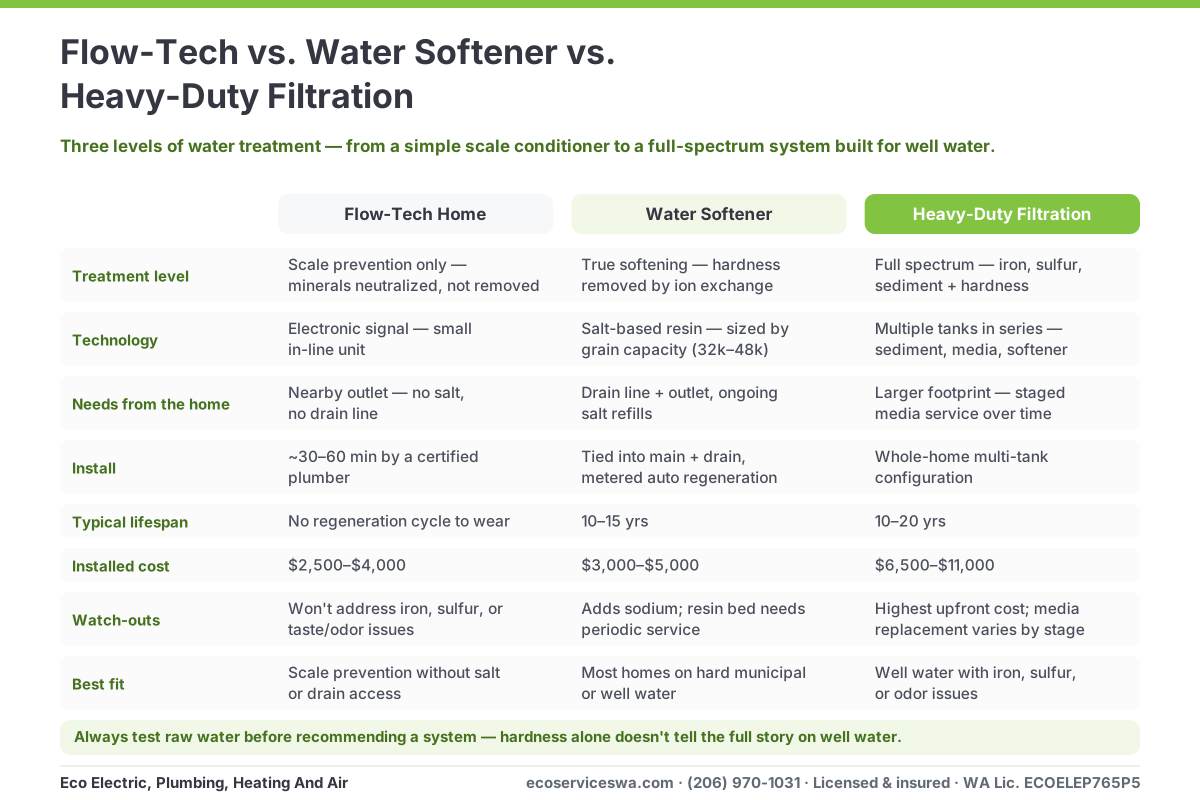
There are three levels of whole-home water treatment, and they solve different problems. Flow-Tech Home is a scale conditioner — an electronic signal unit that prevents scale without salt or a drain, but doesn't remove minerals. A traditional water softener actually removes hardness with salt-based ion-exchange resin. And heavy-duty filtration is the full-spectrum option: multiple tanks in series that handle iron, sulfur, sediment, and hardness together — built for well water and heavy contaminants. The right level starts with a water test, not a brochure.
- Scale prevention only: Flow-Tech Home — a signal-based conditioner with no salt, brine tank, or drain line required.
- True softening: a salt-based ion-exchange softener — the home standard for hard municipal or well water.
- Full-spectrum treatment: multi-stage heavy-duty filtration — iron, sulfur, sediment, and hardness combined, for well-water homes.
- Test first: hardness, iron, pH, and TDS decide the right system — guessing leads to the wrong equipment.
Use this guide when
You're seeing scale on fixtures and glassware, a water heater or tankless unit is failing early, your home is on well water with iron or odor issues, or a plumber has recommended “a water treatment system” without explaining which level you actually need.
What actually drives the decision
Your water chemistry and your household demand. A treatment system is only as good as the water it was designed for — hardness, iron, pH, and TDS have to be tested before anyone recommends equipment, and grain capacity and flow rate have to match household size and peak usage, not just pipe size. Hardness alone doesn't tell the full story on well water.
How it works
Flow-Tech Home — whole-home descaling signal
An entry-level conditioner: a small in-line unit, installed by a certified plumber in roughly 30–60 minutes, that treats water with an electronic signal rather than salt. It needs a nearby power outlet but no brine tank and no drain line, and there's no regeneration cycle — which saves water compared to a softener. It neutralizes hardness minerals rather than removing them, and it gradually breaks down existing scale buildup over time.
Water softener — the home standard
A traditional ion-exchange softener uses salt-based resin, sized by grain capacity (typically 32,000–48,000 grain), with a resin tank and brine tank tied into the main line and a drain. Modern units regenerate on a metered, automatic schedule matched to your actual usage. This is true hardness removal — proven technology that protects water heaters, fixtures, and appliances, typically for 10–15 years.
Heavy-duty filtration — the full-spectrum system
Multi-stage filtration plus softening: multiple tanks in series — sediment, treatment media, softener — configured for what your raw water actually contains. It treats iron, sulfur, sediment, and hardness together, which is why it's the answer for well-water homes with contaminants a softener alone can't touch. Stage-by-stage design means it's customizable, and systems typically serve 10–20 years with staged media replacement.
What does each option cost installed in the Seattle area?
Costs, capacities, and lifespans below are typical ranges as of 2026 and vary by manufacturer, water chemistry, and site conditions — a water test comes before any recommendation.
| Option | Typical installed range | What that covers |
|---|---|---|
| Flow-Tech Home conditioner | $2,500–$4,000 | Small in-line signal unit, ~30–60 minute certified install, nearby outlet required — no salt, no drain. |
| Traditional water softener | $3,000–$5,000 | 32k–48k grain resin + brine tanks tied into the main and drain, metered automatic regeneration, 10–15 year service life. |
| Heavy-duty multi-stage filtration | $6,500–$11,000 | Whole-home multi-tank configuration for iron, sulfur, sediment, and hardness — sized to raw-water chemistry and peak flow. |
What changes the price
- Water testing and analysis — hardness, iron, pH, and TDS decide the equipment
- Drain and electrical access for regeneration and controls
- Sizing to household demand and peak flow, not just pipe size
- Bypass valve placement so the home has water during service
- Local discharge rules — some municipalities and septic systems restrict brine discharge
- Media replacement plan for carbon, iron, and sediment stages
- Permits, backflow devices, and final inspection
Ranges are representative Seattle / Puget Sound installed prices, not a quote — your home's specifics set the real number. Eco gives you an upfront price before any work begins.
Pros and cons, honestly
Flow-Tech Home (scale conditioner)
Pros
- No salt, brine tank, or drain line needed
- Gradually breaks down existing scale buildup
- No regeneration cycle — saves water vs. a softener
- Fast install, effectively no ongoing maintenance
Cons
- Requires a nearby power outlet to operate
- Neutralizes minerals rather than removing them
- Descaling existing buildup takes time to complete
- Won't address iron, sulfur, or taste/odor issues
Water softener (ion exchange)
Pros
- True hardness removal, proven technology
- Protects water heaters, fixtures, appliances
- Sized and programmed to household demand
- Longer fixture and appliance lifespan overall
Cons
- Needs a drain line and nearby outlet
- Ongoing salt purchases and refills
- Adds sodium to treated water
- Resin bed needs periodic service
Heavy-duty filtration (multi-stage)
Pros
- Handles well-water contaminants beyond hardness
- Protects the entire plumbing system
- Customizable, stage-by-stage design
- Best overall water quality outcome
Cons
- Highest upfront cost of the three options
- Larger footprint — multiple tanks
- More components to service over time
- Media replacement varies by stage
Key terms and context
This guide is written for plumbing decisions in the Puget Sound. It uses the same terminology you'll hear from inspectors, technicians, and permit offices.
The system nobody tested for
Many treatment systems get installed without testing the water or sizing the system to household demand — and a treatment system is only as good as the water it was designed for. Guessing leads to the wrong equipment: a conditioner where well water needed iron treatment, or an undersized softener that lets hard water bypass untreated at peak flow. Test hardness, iron, pH, and TDS before anyone recommends a system.
Set-and-forget regeneration mistakes
Incorrect backwash or regeneration settings waste salt and water — or let hard water slip through untreated. Every system also needs a bypass so the home keeps water during service or filter changes, and some municipalities and septic systems restrict or prohibit brine discharge, so local code gets checked before the drain line goes in. Carbon, iron, and sediment media each have a service life that needs to be tracked and scheduled.
How we build this guidance
- We test hardness, iron, pH, and TDS at your house before recommending anything — the water decides, not the brochure.
- Systems are sized to your household's real peak demand, with bypass, drain, and discharge code checked on every install.
- When scale prevention is all your water needs, that's what we quote — no upselling a full-spectrum system.
Methodology: Comparison transcribed from Eco's water-treatment field guidance; costs, capacities, and lifespans are typical ranges as of 2026 and vary by manufacturer, water chemistry, and site conditions. Raw-water testing precedes every recommendation.
Last updated: 2026-07-14
Ready for the next step?
When you're ready to move forward, explore your options or book service with upfront pricing.
Continue exploring
- LearnHard water & filtration in the Puget Sound
- LearnHalo whole-home water filtration (product overview)
- LearnHow long does a water heater last in the PNW?
- EvaluateWater heater cost guide
- EvaluateHeat pump vs tankless vs tank water heater
- EvaluateWater heater repair vs replacement
- BookPlumbing services
- LearnAll Plumbing learn guides
Common questions
Does Flow-Tech replace a water softener?
Not exactly — they do different jobs. Flow-Tech prevents scale by neutralizing hardness minerals with an electronic signal, but the minerals stay in the water. A softener physically removes them through ion exchange. If you want true hardness removal, you want a softener; if you want scale prevention without salt or drain access, that's Flow-Tech territory. A water test settles which one your home actually needs.
Do these systems need a drain line?
Flow-Tech doesn't — no salt, no brine tank, no drain, just a nearby outlet. Softeners and multi-stage filtration systems do need a drain and an outlet for regeneration and controls, and some municipalities and septic systems restrict brine discharge, so we check local code before the install.
What about iron, sulfur, or odor on well water?
That's heavy-duty multi-stage territory. A conditioner won't address iron, sulfur, or taste and odor issues, and a softener alone can't handle everything well water brings in. Multi-stage filtration treats sediment, iron, sulfur, and hardness together, staged to what your raw-water test actually shows.
Why does Eco test the water before quoting?
Because guessing leads to the wrong equipment. Hardness, iron, pH, and TDS decide which level of treatment fits, and grain capacity and flow rate have to match your household's size and peak usage. Hardness alone doesn't tell the full story on well water — the test does.