
Quick answer
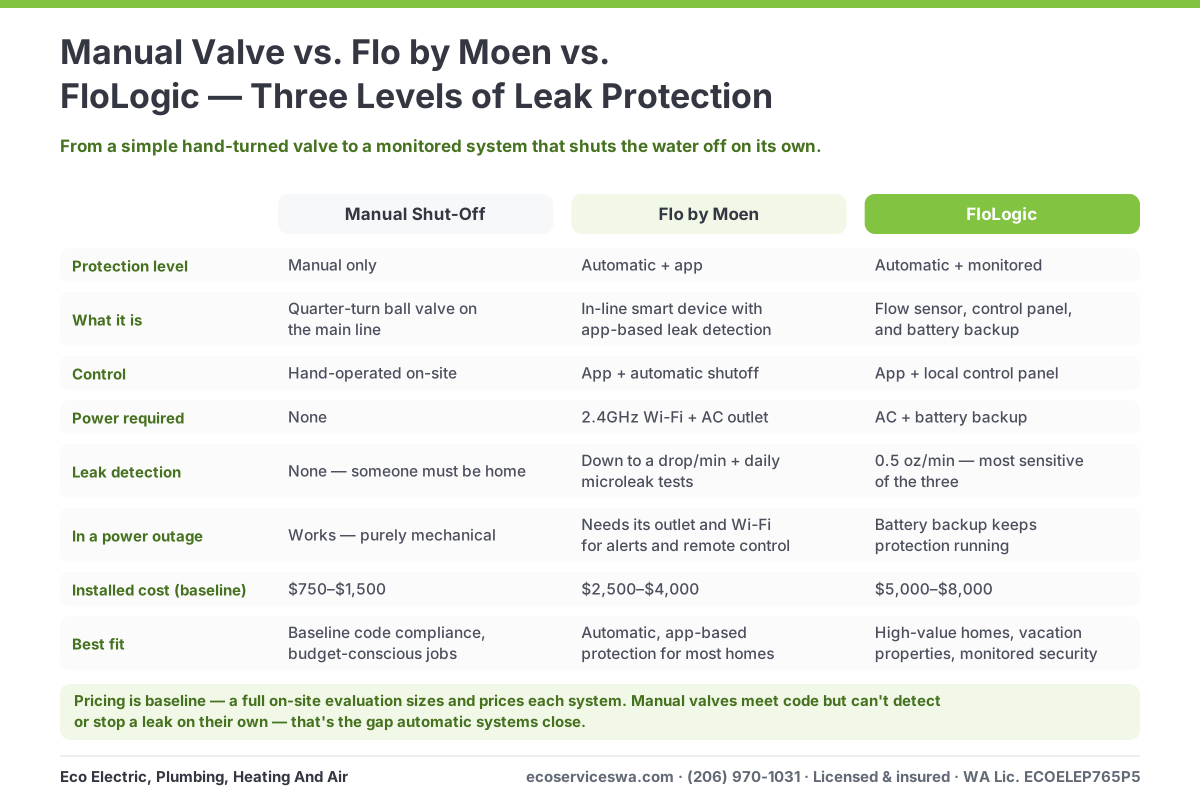
The #1 cause of house floods in U.S. residential homes is plumbing failures — burst or leaking pipes, water heater failures, washing-machine supply hoses, toilet supply-line overflows, and dishwasher or refrigerator water lines. There are three levels of whole-home leak protection. A manual shut-off is a hand-turned quarter-turn ball valve on the main line — reliable, but it only works if someone is home to close it. Flo by Moen is a smart automatic shut-off that learns your household's usage, detects leaks down to a drop per minute, and closes the main from an app anywhere. FloLogic is the monitored tier: commercial-grade flow sensing down to half an ounce per minute, battery backup, and integration with a security system for third-party monitoring. Pricing on all three is baseline — a full on-site evaluation is required to properly size and price each system.
- Plumbing failures are the #1 cause of residential house floods in the U.S. — automatic shutoff closes that gap while you're asleep or away.
- Baseline protection: a manual quarter-turn valve — no power, no app, instant physical shutoff, but no leak detection.
- The home standard: Flo by Moen — app-based automatic shutoff that learns usage and runs daily microleak tests.
- Monitored protection: FloLogic — the most sensitive detection of the three, with battery backup and security-system tie-in.
Use this guide when
You're weighing leak protection after a scare (or a neighbor's claim), your insurer offers a discount for automatic shutoff, you travel or own a vacation property that sits empty, or a remodel has the main line accessible and you want protection installed while the wall is open.
What actually drives the decision
How your home actually uses water — and who's there when something fails. A shut-off system only protects the home if it's set up for real usage patterns: softener regeneration, irrigation, and pool fills need a bypass so normal cycles aren't flagged as leaks, and flow-time thresholds have to be calibrated to your household or the system will trigger false shutoffs. If nobody's home for days at a time, detection sensitivity and battery backup start to matter as much as the valve itself.
How it works
Manual shut-off — the quarter-turn ball valve
Baseline protection: a standard quarter-turn valve on the main line, hand-operated with no power, Wi-Fi, or app dependency. It's an instant, reliable physical shutoff that any homeowner can operate — but it has no leak detection, no alerts, and it requires someone on-site to close it. It meets baseline code requirements and stops nothing while you're away.
Flo by Moen — smart automatic shut-off
An in-line device on the main that needs 2.4GHz Wi-Fi and a nearby AC outlet. It learns your household's usage patterns and flags abnormal flow, runs daily microleak tests that catch tiny drips early, and detects leaks down to a drop per minute. You get app alerts and remote shutoff from anywhere, and a professionally installed unit may qualify for homeowner's insurance discounts. Best installed by a licensed plumber.
FloLogic — automatic shut-off plus monitoring
The monitored tier: commercial-grade flow sensing (down to 0.5 oz per minute — about a tablespoon), a control panel, and battery backup that keeps protection running through power outages. It integrates with a security system for third-party monitoring, is rated for indoor and outdoor installation, and suits high-value homes and vacation properties where nobody's on-site to notice a leak.
What does each option cost installed in the Seattle area?
Costs shown are baseline estimates as of 2026 — a full on-site evaluation is required to properly size and price each system for the home.
| Option | Typical installed range | What that covers |
|---|---|---|
| Manual shut-off valve | $750–$1,500 | Standard quarter-turn ball valve on the main line — manual control only, no power required, no leak detection. |
| Flo by Moen smart shut-off | $2,500–$4,000 | In-line smart device — app plus automatic shutoff, Wi-Fi and AC outlet required, leak sensitivity down to a drop per minute. |
| FloLogic monitored shut-off | $5,000–$8,000 | Flow sensor, control panel, and battery backup — 0.5 oz/min sensitivity with security-system monitoring tie-in. |
What changes the price
- Main line location and access — room for the valve and any control hardware
- Pipe size and compatibility — most systems fit 3/4-in. to 2-in. lines
- Power and Wi-Fi availability where smart systems install
- Bypass for softeners, irrigation, and pool fills so normal cycles aren't flagged as leaks
- Backflow and pressure fluctuations that can cause false flow readings
- Home/Away sensitivity calibration to the household's real usage
- Security-system compatibility if you want monitoring tie-in
- Permits and insurance documentation — many insurers require proof of professional install for the discount
Ranges are representative Seattle / Puget Sound installed prices, not a quote — your home's specifics set the real number. Eco gives you an upfront price before any work begins.
Pros and cons, honestly
Manual shut-off (quarter-turn valve)
Pros
- Lowest cost of the three options
- No power, Wi-Fi, or app dependency
- Instant, reliable physical shutoff
- Simple for any homeowner to operate
Cons
- No automatic leak detection
- Requires someone on-site to close it
- No remote control or alerts
- Won't stop damage while away
Flo by Moen (smart automatic)
Pros
- Learns household usage, flags abnormal flow
- Daily microleak tests catch tiny drips early
- App alerts and remote shutoff from anywhere
- May qualify for homeowner's insurance discounts
Cons
- Requires 2.4GHz Wi-Fi and a nearby outlet
- No standalone security-monitoring integration
- Extended warranty is a paid add-on
- Best installed by a licensed plumber
FloLogic (automatic + monitored)
Pros
- Most sensitive detection of the three — down to a tablespoon per minute
- Battery backup keeps working through outages
- Integrates with a security system for third-party monitoring
- Commercial-grade construction, rated for indoor/outdoor use
Cons
- Highest equipment and install cost
- Control panel adds install complexity
- Monitoring station tie-in may carry its own fee
- Larger footprint than a simple in-line device
Key terms and context
This guide is written for plumbing decisions in the Puget Sound. It uses the same terminology you'll hear from inspectors, technicians, and permit offices.
Installed without checking how the home uses water
Shut-off systems get installed without confirming the pipe, power, and bypass needs of the home — and a shut-off only protects the house if it's set up for how that home actually uses water. Softener regeneration, irrigation, and pool fills need a bypass so their normal cycles aren't flagged as leaks; flow-time thresholds have to be calibrated to the household or the system triggers false shutoffs; and pressure fluctuations or backflow risk can cause false flow readings if nobody checked for them.
The gap a manual valve leaves
A manual valve meets baseline code requirements, and it's a genuinely reliable physical shutoff — when someone is home to turn it. It can't detect a leak, can't alert you, and can't act while you're at work or away for a week. That gap — the burst hose at 2 AM, the pinhole drip behind a wall, the failed tank in an empty house — is exactly what automatic systems close.
How we build this guidance
- We confirm main-line access, pipe size, power, and Wi-Fi before quoting — not after the box is on site.
- Bypass setup and Home/Away calibration are part of every smart shut-off install, so false shutoffs don't sour the system.
- We document the professional install so you can claim the insurance discount many carriers offer.
Methodology: Comparison transcribed from Eco's water shut-off field guidance; costs are baseline estimates as of 2026 — a full on-site evaluation is required to properly size and price each system for the home.
Last updated: 2026-07-14
Ready for the next step?
When you're ready to move forward, explore your options or book service with upfront pricing.
Continue exploring
- LearnWhole-home leak protection — Flo by Moen & FloLogic
- LearnFlo by Moen smart water shut-off (product overview)
- LearnSlab leak warning signs
- EvaluateSlab leak detection — cost and process
- EvaluateRepipe vs spot repair decision guide
- EvaluateSump pump backup options for Washington
- BookPlumbing services
- LearnAll Plumbing learn guides
Common questions
Will a smart shut-off turn my water off by mistake?
Not when it's set up for how your home actually uses water. Softeners, irrigation, and pool fills get a bypass so their normal cycles aren't flagged as leaks, and Home/Away flow thresholds are calibrated to your household during the install. If a false trigger ever happens, you can reopen the valve from the app in seconds.
What does Flo by Moen need to work?
Reliable 2.4GHz Wi-Fi and a nearby AC outlet, plus a compatible main line — most systems fit 3/4-in. to 2-in. pipe. It's best installed by a licensed plumber, and it doesn't offer standalone security-monitoring integration; if you want a monitored tie-in, that's FloLogic's lane.
Which system detects the smallest leaks?
FloLogic is the most sensitive of the three — it detects flow down to 0.5 ounces per minute, about a tablespoon. Flo by Moen detects leaks down to a drop per minute and also runs daily microleak tests that catch tiny drips early. A manual valve detects nothing — it's purely a hand-operated shutoff.
Will leak protection lower my insurance premium?
A professionally installed automatic shut-off may qualify for homeowner's insurance discounts — many insurers require proof of professional installation to apply one. We document the install so you have what your carrier needs; check with your agent for your policy's specifics.
Does FloLogic keep working in a power outage?
Yes — battery backup keeps FloLogic protecting the home through outages. A manual valve needs no power at all. Flo by Moen needs its AC outlet and Wi-Fi connection for app alerts and remote control.