
Quick answer
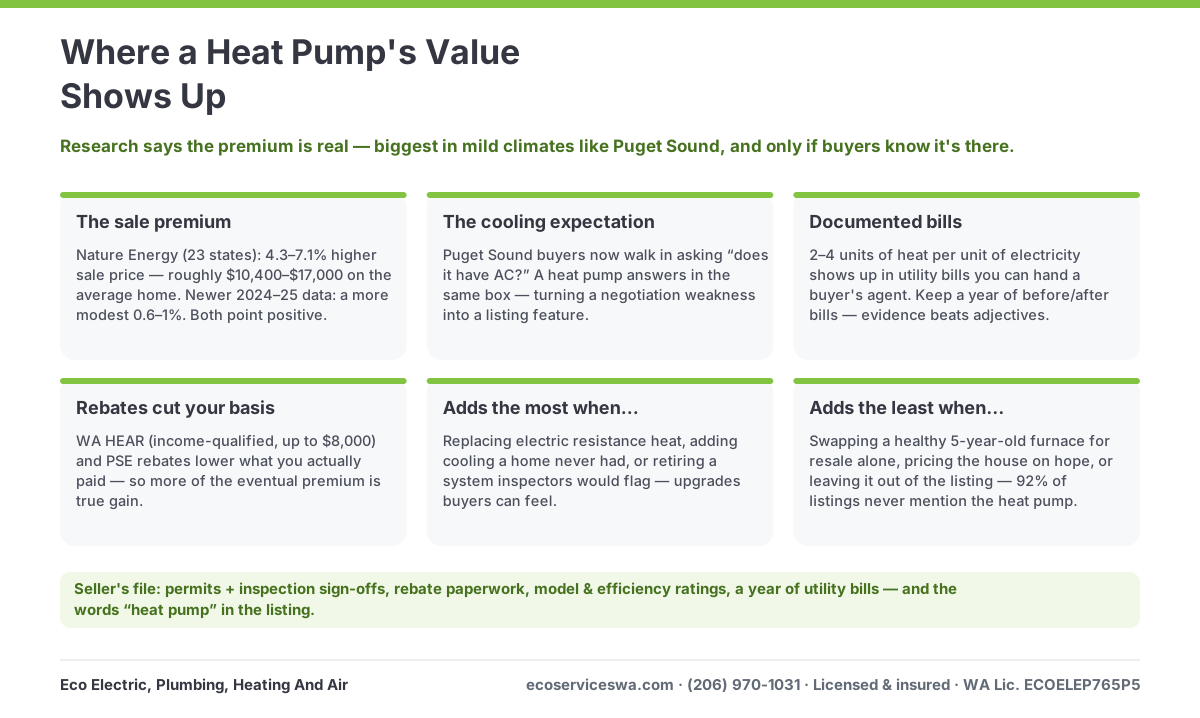
Yes — research consistently finds homes with heat pumps sell for more, though the size of the premium varies widely. A study across 23 states published in Nature Energy found homes with air-source heat pumps sold for 4.3–7.1% more (roughly $10,400–$17,000 on average), with buyers in mild climates — like ours — willing to pay the most. A more conservative 2024–25 analysis found premiums closer to 0.6–1%. The honest summary: the value is real, it's biggest in markets like Puget Sound, and it only shows up if buyers actually know the heat pump is there — which, remarkably, most listings never mention.
- Peer-reviewed research (Nature Energy) found a 4.3–7.1% sale premium across 23 states; newer 2024–25 data suggests a more modest 0.6–1%. Both directions point the same way: positive.
- Mild-climate buyers pay the largest premiums in the research — and Puget Sound is a textbook mild climate.
- About 92% of listings for heat-pump homes never mention the heat pump. Unmentioned value is unpaid value.
- WA HEAR and PSE rebates cut your net installed cost, which improves the value math before the sale even happens.
Where the value actually shows up
Four channels. The sale premium: real, with an honest range. The cooling expectation: buyers increasingly walk in asking “does it have AC?” — a heat pump turns a negotiation weakness into a listing feature. Documented operating costs: 2–4 units of heat per unit of electricity shows up in utility bills you can hand a buyer's agent — keep a year of before/after bills, because evidence beats adjectives. The avoided discount: a dying furnace is negotiation ammunition against you — inspection reports price failing HVAC hard, and a new system removes that card from the table entirely. And the net-cost math: WA HEAR (income-qualified, up to $8,000) and PSE rebates cut what you actually spent, which means the resale value has less ground to cover before the upgrade pays.
Make the value real: the seller's file
When the time comes, the difference between capturing this premium and donating it is mostly paperwork and marketing. Keep the permits and inspection records, the rebate paperwork, the model and efficiency ratings, and a year of utility bills. Then make sure the words “heat pump” and “air conditioning” actually appear in your listing — remember, 92% of sellers forget, and their premium evaporates with the omission. Tell your agent; it takes one sentence.
How it works
What the research actually says
The headline study, published in Nature Energy by researchers at the University of Maryland and Carnegie Mellon, analyzed home sales across 23 U.S. states and found air-source heat pumps associated with a 4.3–7.1% price premium — $10,400 to $17,000 on the average home in the sample. It also found the premium concentrated among buyers in mild climates and environmentally conscious markets. A more recent analysis of 2024–25 sales found smaller numbers: ducted heat pumps associated with premiums of roughly 0.6–1%, or $2,300–$3,900 on a median-priced home. Why the gap? Markets shift, methods differ — and crucially, the newer analysis surfaced a detail that explains a lot: 92% of listings for homes with heat pumps never mentioned the heat pump. Buyers can't pay for what they don't know exists. Treat the range honestly — somewhere between “noticeable” and “substantial” — and treat the marketing lesson as the actionable part.
Why Puget Sound is where the premium concentrates
Three local forces stack in the same direction. Our mild winters are ideal heat pump territory, so the equipment performs at its best here — no asterisks about backup heat dominating January. Our summers now demand cooling, and a heat pump answers that in the same box; a home with real AC has a concrete edge in an August showing. And this region's buyers skew toward exactly the demographics the research identifies as paying the premium. A heat pump is a stronger value story in Seattle than in most of the country.
Key terms and context
This guide is written for heating & air decisions in the Puget Sound. It uses the same terminology you'll hear from inspectors, technicians, and permit offices.
The honest caveats
Appraisers don't line-item HVAC — the value flows through condition ratings, buyer competition, and negotiation, not a dollar-for-dollar appraisal bump. It won't rescue an overpriced house: a heat pump strengthens a well-priced listing; it doesn't defy gravity. The premium is largest when the upgrade changes something buyers feel — replacing electric resistance heat, adding cooling a home never had, or retiring a system inspectors would flag. Swapping a healthy 5-year-old furnace for resale value alone doesn't pencil.
Unpermitted work subtracts value
Unpermitted or badly installed systems subtract value rather than add it. Permits, inspection sign-offs, and a clean install are part of the asset — keep the paperwork with the house.
How we build this guidance
- Value claims cite published research — Nature Energy's 23-state study and 2024–25 market analyses — with the honest range, not the cherry-picked end.
- We install heat pumps across Seattle and Everett, and we'll tell you when replacing a healthy system for resale alone doesn't pencil.
- Rebate figures verified against Washington program sources, July 2026.
Methodology: Sale-premium figures from peer-reviewed and market research as cited; local context from Puget Sound installation and market experience. We are not appraisers or real estate agents, and individual results vary with market conditions.
Last updated: 2026-07-13
Ready for the next step?
When you're ready to move forward, explore your options or book service with upfront pricing.
Continue exploring
- LearnWhat does a heat pump cost to run in Seattle?
- LearnWashington HVAC rebates explained
- EvaluateHeat pump vs gas furnace — which should heat your home?
- EvaluateHeat pump vs air conditioner — what's the difference?
- EvaluateHow much does an HVAC system cost in Seattle?
- BookHeat pump estimates
- LearnFurnace vs heat pump for Puget Sound homes
- LearnAll Heating & Air learn guides
Common questions
How much value does a heat pump add?
Published research ranges from about 0.6–1% (recent market data) to 4.3–7.1% (a 23-state academic study) of sale price. The honest answer is a range, biggest in mild-climate markets like ours — and near zero if the listing never mentions it.
Will a heat pump help my home sell faster?
There's less hard research on speed than on price, but the mechanism is straightforward: built-in AC and documented low bills remove two common buyer objections. What we can say with confidence is that a failing HVAC system slows sales and invites price cuts — and a new heat pump takes that risk off the table.
Should I install a heat pump right before selling?
Only if the current system is a liability — aging out, flagged in pre-inspection, or lacking cooling entirely. If your system is healthy and modern, the money usually returns more elsewhere. The best value case is owning the heat pump for years of lower bills and comfort, then selling with the premium on top.
Do appraisers add the heat pump to my home's value?
Not as a line item. It shows up indirectly: system condition, effective age of the home's mechanicals, and comparable sales. The stronger effect is on buyers, not appraisers — which is why the listing language matters so much.
Does the rebate money affect resale value?
It affects your side of the ledger: rebates lower what you paid, so more of the eventual premium is true gain. A heat pump that cost you $20,000 installed but $12,000 after income-qualified rebates, and adds $8,000–$15,000 of buyer appeal, is a very different investment than the same unit at sticker price.