
Quick answer
Your ducts are the lungs of your home — every breath of heated or cooled air travels through them, past whatever has settled there since they were installed. A professional duct cleaning removes that accumulated reservoir of dust, pollen, pet dander, and debris, and a quality job goes further: it cleans the blower wheel and coil, where buildup genuinely drags down airflow and efficiency. The benefits are biggest for homes with pets or allergies, after remodels or pest problems, when you've just bought a home whose history you didn't live in — and any time it's been years since the system had a reset.
- Every breath of conditioned air travels through your ducts — cleaning removes years of settled dust, dander, pollen, and debris from that path.
- A quality cleaning is whole-system: ducts and returns plus the blower wheel and coil, where buildup measurably restricts airflow.
- Biggest payoffs: pets, allergies, finished remodels, pest events, newly purchased homes, and a clean start for new equipment.
- Quality separates hard in this service — source-removal equipment, photo evidence, and a NADCA-standard process are what you're actually buying.
When cleaning pays off the most
Pets or allergy households — lowering the total dander and dust load in the air path, paired with a good filter, is a meaningful indoor-air upgrade. After a remodel — construction dust genuinely loads up ductwork, and it's the classic case where even skeptics agree cleaning earns its cost. After pests — droppings and nesting material in ducts are a health issue, not a cosmetic one: clean, decontaminate, and seal the entry points so it doesn't recur. You just bought the home — you inherited the previous owners' decades: their pets, their projects, their smoking habit, their crawlspace. New equipment going in — don't blow ten years of old buildup through a brand-new furnace or heat pump. Mold or water intrusion — cleaning belongs in the fix, alongside solving the moisture source. And any time it's been years — or never: NADCA, the industry's certifying body, suggests regular inspection, with typical homes cleaning every 3–5 years; pets, remodels, and pests move that timeline earlier.
Honest expectations — and how to keep it clean
A cleaning is a reset, not a force field. What keeps the system clean afterward: a quality filter (MERV 11–13) changed on schedule, and — this matters in our region — sealing any leaky duct runs, because leaks in a crawlspace will slowly refill what the cleaning removed. Cleaning and sealing are natural companions: one removes the buildup, the other closes the door it came through. If a duct inspection turns up leaks, crushed runs, or disconnections, you want to know while the crew is already there — which is why a camera inspection belongs in the visit.
How it works
What professional cleaning actually removes
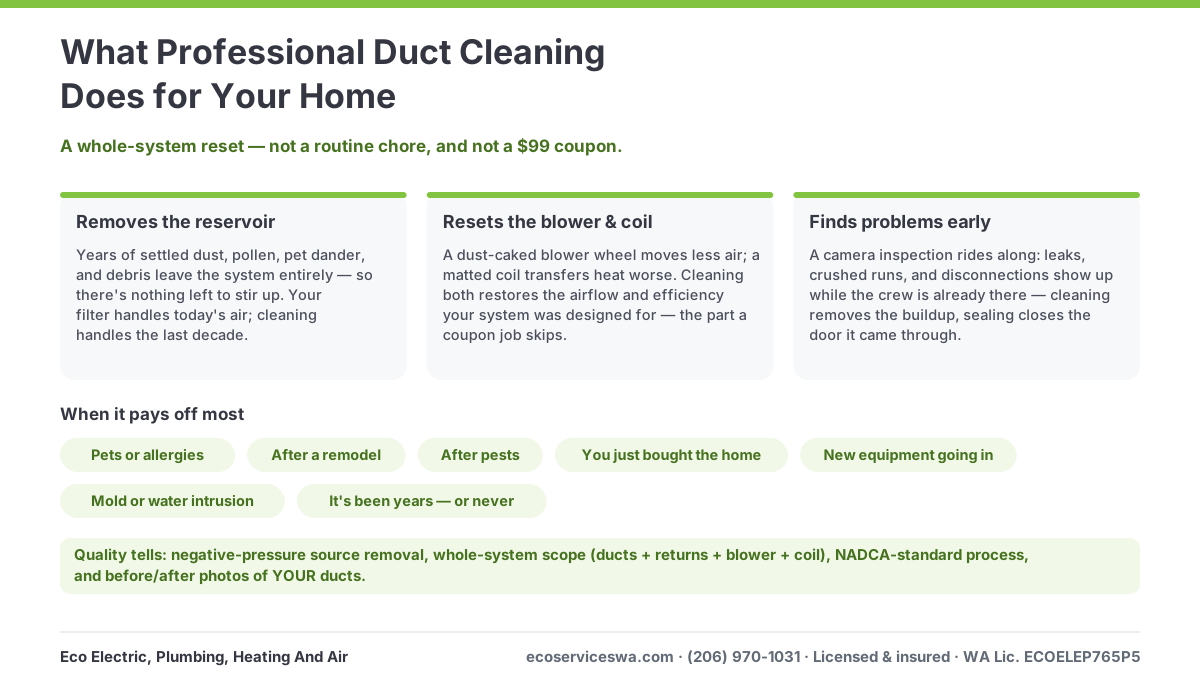
Over years of operation, a duct system quietly accumulates a reservoir: household dust, pollen that rode in each spring, pet dander, insect debris, drywall dust from every project since the house was built, and — in Puget Sound homes with crawlspace duct runs — whatever the crawlspace contributed along the way. Most of it lies settled until something stirs it: the blower surging on, a register getting bumped, duct work during a repair. Cleaning takes the reservoir out of the system entirely, so there's nothing there to stir up. Your filter protects you from what's circulating today; cleaning deals with what's been collecting for a decade.
The benefit most people miss: the system's internals
Some of the most measurable value in a quality duct cleaning isn't in the ducts. It's in the blower wheel and the coil. A blower wheel caked with dust moves noticeably less air — the buildup literally changes the blade shape. A coil matted with debris transfers heat worse and forces longer run times. Cleaning these restores the airflow and efficiency your system was designed for, which is why a proper duct cleaning includes them and a coupon job doesn't. If your system seems weaker than it used to be, this is often a real part of the answer.
What a quality cleaning looks like
This is a service where the gap between done-right and done-cheap is enormous, so know what you're buying. A quality cleaning uses negative-pressure source removal — a powerful vacuum on the trunk line while agitation tools work debris loose, so contaminants leave the system instead of getting redistributed. It covers the whole system: supply runs, return runs, registers, the blower, and the coil. Tools get matched to your duct type, because aging flex duct needs different handling than sheet metal. Access holes get sealed properly afterward. And you should see evidence: before-and-after photos of your actual ducts, not stock images. Expect a multi-hour visit — that's what the real service takes.
Key terms and context
This guide is written for heating & air decisions in the Puget Sound. It uses the same terminology you'll hear from inspectors, technicians, and permit offices.
One warning: bait pricing is a different product
You'll see $99 whole-house duct cleaning offers. A real cleaning is hours of labor with truck-mounted or negative-pressure equipment — that math doesn't work at $99, and the business model behind those coupons is finding expensive surprises once they're inside your home. The tells of a legitimate company: flat pricing in writing, photo evidence of your ducts before and after, and no mid-job mold discoveries without lab tests. Hold us to the same standard.
When cleaning isn't the fix
If the real problem is duct leaks, crushed runs, or disconnections, cleaning alone won't fix comfort or bills — leaks in a crawlspace will slowly refill what the cleaning removed. That's why a camera inspection belongs in the visit, and why cleaning and sealing are natural companions.
How we build this guidance
- We clean whole systems — ducts, returns, blower, and coil — and show before/after photos of your actual ductwork as standard practice.
- Guidance follows EPA guidance (clean as needed) and NADCA industry standards for how the work should be done.
- We'll tell you when cleaning isn't the fix — if your real problem is duct leaks, we'll say so and quote the sealing instead.
Methodology: Cleaning criteria and cadence per EPA guidance and NADCA recommendations; system-performance effects described from field experience with blower and coil buildup.
Last updated: 2026-07-13
Ready for the next step?
When you're ready to move forward, explore your options or book service with upfront pricing.
Continue exploring
- LearnHow does ductwork work in your home?
- LearnWhen should you replace your ductwork?
- LearnIndoor air quality basics for Puget Sound homes
- EvaluateRepair vs replace — the decision framework
- EvaluateDucted vs ductless vs mixed — which layout fits your home?
- EvaluateIndoor air quality packages & pricing
- BookDuct inspection and cleaning
- LearnThe right time to schedule a duct cleaning
- LearnStatic pressure, explained for homeowners
- LearnAll Heating & Air learn guides
Common questions
How often should ducts be cleaned?
The EPA's guidance is as needed rather than on a fixed schedule; NADCA suggests regular inspection, with typical homes landing at every 3–5 years. Pets, allergies, remodels, and pest events move you toward the early end. A camera inspection settles it for your specific house.
What does a legitimate duct cleaning cost?
Enough to cover a multi-hour visit with negative-pressure equipment and a trained crew — priced flat and in writing, varying with home size and access. The $99 coupon version is a different product with a different business model.
Will duct cleaning lower my energy bills?
The most measurable gains come from the system side of the cleaning — a clean blower wheel and coil restore airflow and heat transfer your equipment has been fighting to overcome. Pair the cleaning with duct sealing and you're improving both what moves the air and where the air goes.
Does duct cleaning help with allergies?
It removes the settled reservoir of dander, pollen, and dust from the air path, which lowers what can recirculate — a meaningful reduction when paired with MERV 11–13 filtration. It's an indoor-air improvement, not a medical treatment, and we'd tell you if your situation called for more than cleaning.
Can cleaning damage older ducts?
In untrained hands, yes — aggressive tools can tear aging flex duct liner. That's an argument for experienced crews, not against cleaning: quality companies inspect first and match tools to duct type. It's also why we photograph everything before we start.