



If your water heater is aging out or your energy bills keep climbing, 2026 is the best time in a generation to make a change. Across Seattle and the greater Puget Sound area, homeowners are increasingly turning to heat pump water heaters (HPWHs), and for good reason.
In this guide, the experts at Eco Electric, Plumbing, Heating & Air walk you through everything you need to know, from how the technology works to how much you’ll actually pay after rebates
What Is a Heat Pump Water Heater and How Does It Work?
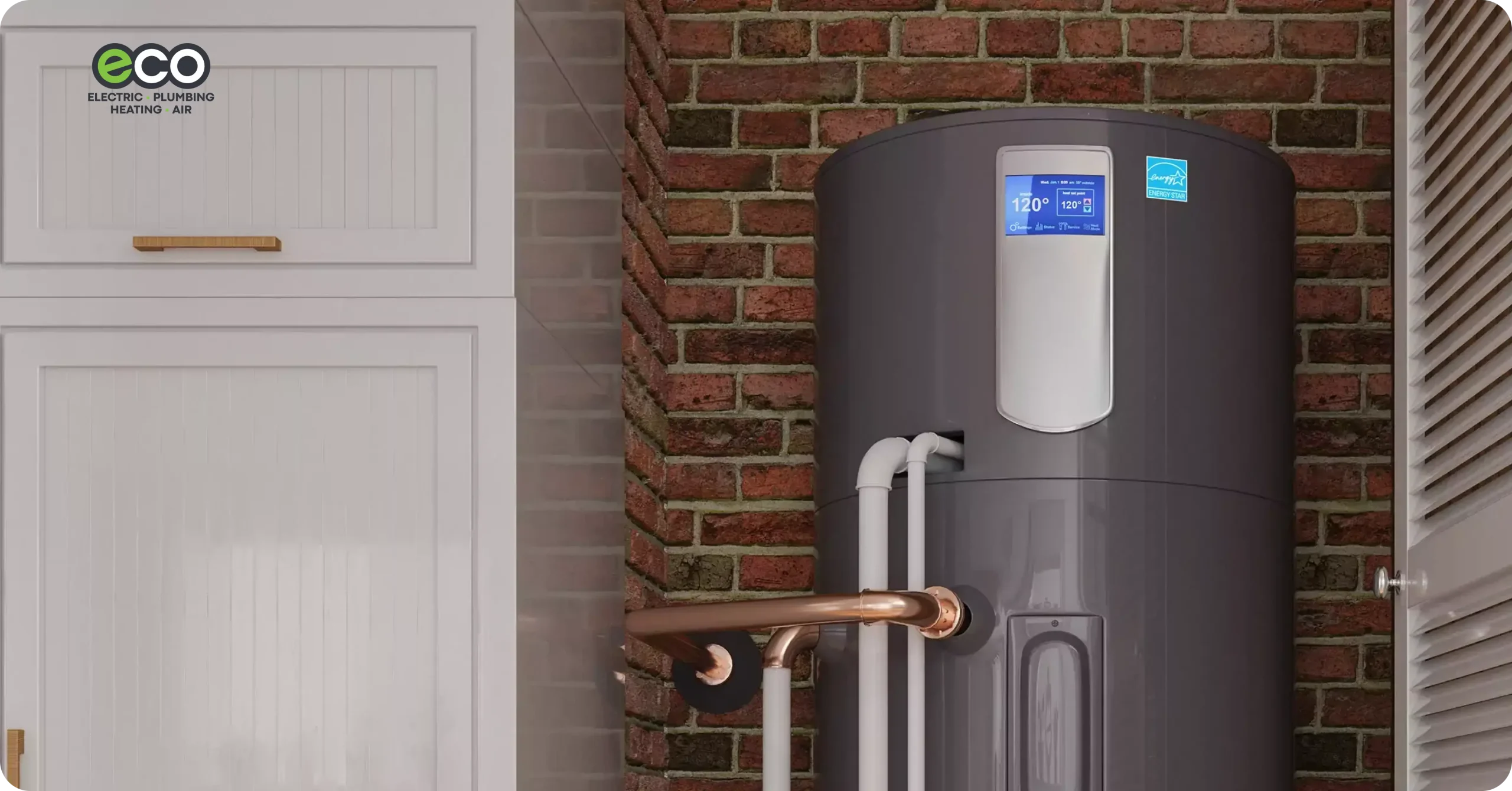
A heat pump water heater, also called a hybrid electric water heater, doesn’t generate heat directly. Instead, it pulls warmth from the surrounding air and transfers it to the water in the tank, much like a refrigerator works in reverse. This makes HPWHs dramatically more efficient than conventional electric resistance water heaters.
Here’s why that matters in practice:
- HPWHs are 2 to 3 times more energy-efficient than standard electric water heaters
- They can reduce water heating energy use by up to 70%
- Many models include smart features like vacation mode, scheduling, and app-based controls
- They qualify for ENERGY STAR certification and utility rebates
The technology is mature, reliable, and widely available from leading brands. For Seattle homeowners already on Seattle City Light’s electric grid, the efficiency gains translate directly into lower monthly bills, typically around 10% or more on your overall utility bill.
Why Seattle Homeowners Are Switching in 2026
Seattle is one of the most forward-leaning cities in the country when it comes to home electrification, and 2026 is a pivotal year. Several factors are converging to make the switch more attractive and more urgent than ever:
Washington State’s clean energy push
Washington has set aggressive decarbonization targets, and residential water heating is a major focus. State programs and utility incentives are aligned to help homeowners make the transition with minimal out-of-pocket costs.
Aging infrastructure across Seattle neighborhoods
The average water heater lasts 8–12 years. Millions of units installed during Seattle’s growth boom are now approaching or past their service life. If you’re already due for a water heater replacement, upgrading to an HPWH instead of a like-for-like replacement is a smart financial move.
Rebate programs are at their most generous
Multiple overlapping incentive programs from Seattle City Light, the federal HEAR program, and Puget Sound Energy make 2026 one of the most financially favorable windows to upgrade. More on those below.
Do You Need an Electrical Upgrade Too?
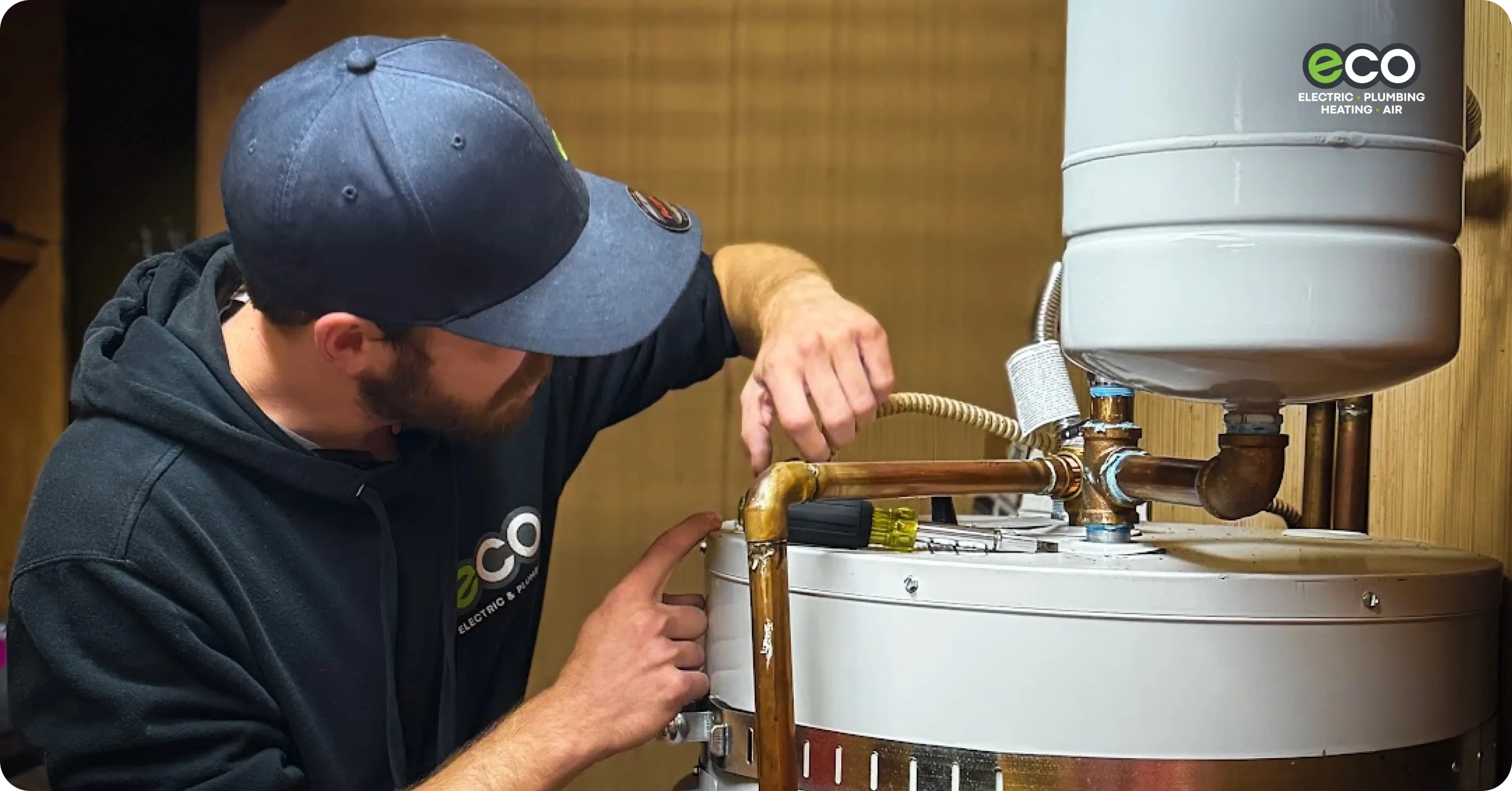
This is one of the most common questions Seattle homeowners ask and the honest answer is: sometimes yes, but often no.
A standard heat pump water heater requires a dedicated 240V / 30-amp circuit. Many Seattle homes built after the 1980s already have adequate panel capacity. However, older homes, especially those with 100-amp panels or outdated wiring, may need an upgrade before an HPWH can be safely installed.
Signs you may need an electrical upgrade alongside your HPWH installation:
- Your home has a 100-amp (or smaller) electrical panel
- You’re planning multiple electrification projects (EV charger, heat pump, HVAC, induction range)
- Your panel is near full capacity with existing circuits
The good news: if an electrical upgrade is needed, the HEAR program covers up to $4,000 specifically for panel and wiring upgrades required to support new appliances. Learn more on our Electrical Panel Upgrades page. Because Eco handles both plumbing and electrical, you get a single coordinated install with one point of contact, no juggling separate contractors.
How Long Does Heat Pump Water Heater Installation Take?
For most Seattle homeowners, a straightforward HPWH swap in the same location, with adequate electrical, takes 3 to 5 hours in a single visit. Here’s a general timeline:
- Initial assessment and quote: same-day or next day
- Permit application (Seattle requires permits for water heater installations): 1–3 business days
- Installation day: 3–5 hours for a standard swap
- Electrical work (if needed): may add 2–4 hours or a separate visit
- Inspection: typically scheduled within a few days of installation
Eco offers same-day dispatching, where scheduling permits, so you often won’t be without hot water for long. Our team handles the permit process on your behalf, so you don’t have to navigate the city’s building department.
Frequently Asked Questions
1. Can a heat pump water heater work in Seattle’s climate?
Yes. HPWHs extract heat from ambient air, and they operate effectively in temperatures as low as 40°F. Seattle’s mild climate is actually well-suited for heat pump technology. Units installed in conditioned spaces like basements or garages perform particularly well year-round.
2. How much space does a heat pump water heater need?
HPWHs are taller than conventional tanks (typically 60–70 inches) and require a minimum of 700–1,000 cubic feet of surrounding air space to function efficiently — roughly a 10′ x 10′ room. Garages, basements, and utility rooms are ideal locations. Our technicians will assess your space during the initial estimate.
3. What happens to my old water heater?
Eco handles disposal of your old unit as part of the installation. We follow all local Seattle and King County regulations for appliance recycling and disposal.
4. Is a heat pump water heater the same as a tankless water heater?
No. A heat pump water heater still uses a storage tank, but heats water far more efficiently than conventional tank heaters. Tankless water heaters heat on demand with no storage tank. Both have advantages depending on your home and usage patterns. Our team can help you compare options. Visit our Tankless Water Heater page for more details.
5. Will my water heater qualify for rebates?
To qualify for Seattle City Light rebates, your new HPWH must be ENERGY STAR rated and meet Tier 3 or Tier 4 efficiency standards. Eco works exclusively with qualifying equipment and will confirm eligibility before your installation date.
Ready to Upgrade? Schedule a Free Estimate with Eco
A heat pump water heater is one of the smartest home upgrades a Seattle homeowner can make in 2026. Lower energy bills, a smaller carbon footprint, and significant rebate dollars available right now. But timing matters: rebate funding is subject to availability, and some programs could be revised later in the year.
At Eco Electric, Plumbing, Heating & Air, our licensed plumbers and electricians handle the complete installation from permit to final inspection, so you get a seamless, code-compliant upgrade with zero hassle.
