


A noisy air conditioner can be more than just annoying. Strange sounds often signal that something inside the system isn’t working properly and ignoring those warning signs can sometimes lead to bigger, more expensive repairs.
Some AC noises are harmless. Others may point to electrical problems, airflow restrictions, loose components, or even compressor damage. The key is understanding which sounds are normal and which ones deserve professional attention.
This guide explains 10 common AC noises, what they often mean, and when it’s time to call an HVAC technician.
Is It Normal for an Air Conditioner to Make Noise?
Yes , every AC system makes some level of sound during normal operation. Light humming, soft airflow noises, and occasional clicking during startup or shutdown are usually nothing to worry about.
However, loud, sudden, metallic, or persistent noises often indicate a developing issue. If the sound is getting worse, affecting cooling performance, or accompanied by burning smells or short cycling, the system should be inspected.
As a general rule:
- Soft humming = usually normal
- Loud banging or grinding = usually serious
- Repeated buzzing or electrical sounds = worth checking quickly
- Hissing with weak cooling = possible refrigerant issue
1.Buzzing AC Noises – Causes and Solutions
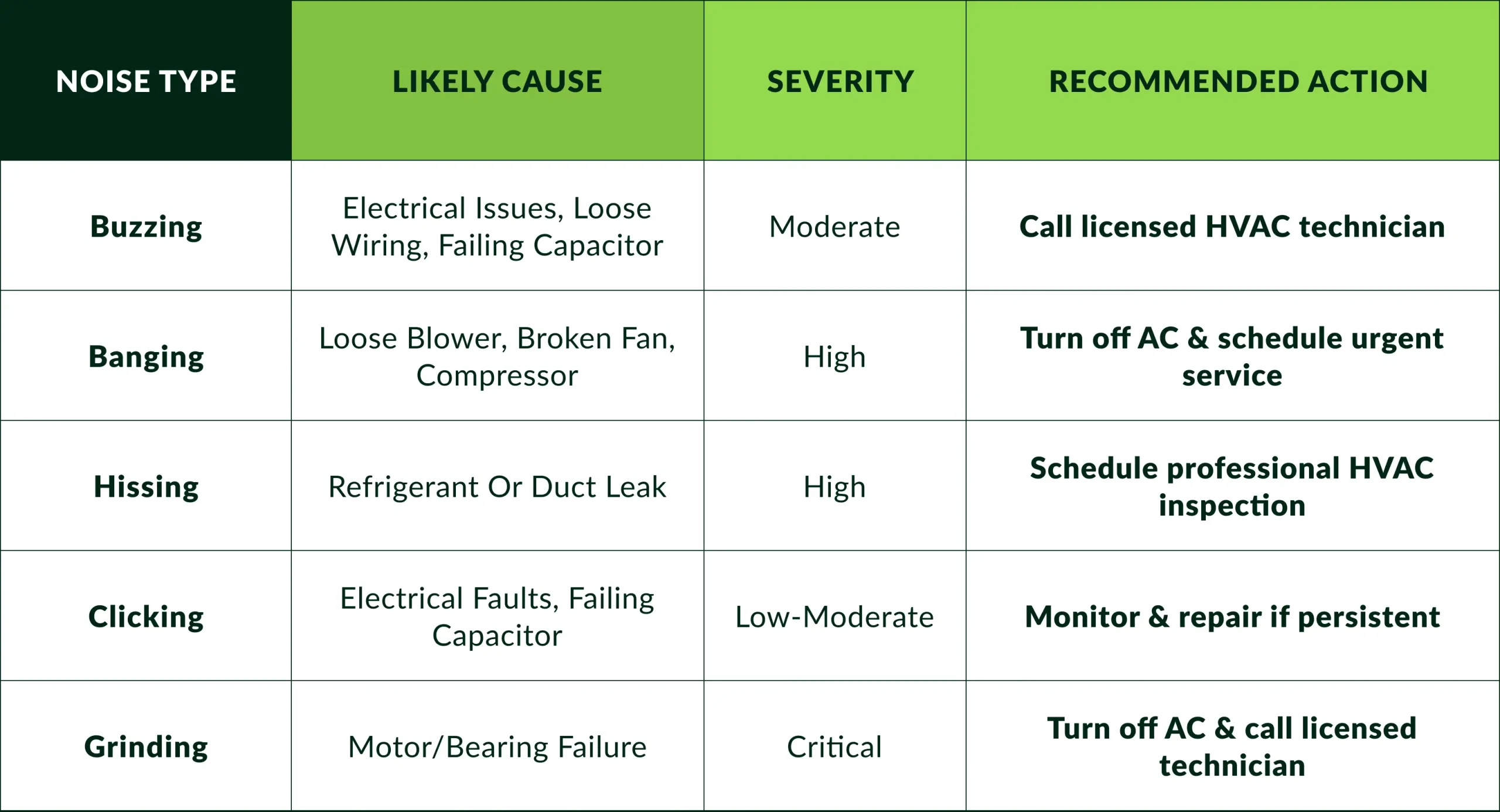
A buzzing AC unit is one of the most common homeowner complaints.
Possible Causes
- Loose wiring
- Electrical issues
- Failing capacitor
- Dirty condenser coil
- Refrigerant problems
Sometimes the buzzing comes from the outdoor unit, while other times it may originate near the thermostat or indoor air handler.
When to Call an HVAC Technician
If your AC is buzzing persistently or airflow is weak, schedule a same-day inspection with a licensed HVAC technician to prevent further damage.Electrical issues in your AC can escalate quickly, potentially damaging the compressor or blower motor. Schedule a professional inspection immediately to avoid costly repairs. Schedule a professional inspection to prevent costly repairs.
2. Banging AC Noises : When to Call a Technician
Banging noises are rarely normal.
A loud metal-on-metal sound often means an internal component has loosened or broken inside the system.
Possible Causes
- A loose blower assembly inside your air conditioner can create loud banging noises and reduce cooling efficiency.
- Broken internal components
- Compressor problems
- Fan imbalance
When It’s Serious
Sudden or increasing banging noises from your AC often indicate internal mechanical problems. Turn off your AC and contact a licensed HVAC technician immediately, turn off your unit and call our licensed HVAC technicians immediately to avoid expensive repairs. Continuing to run the AC may cause additional mechanical damage.
Unusual AC Noises and the Problems Behind Them
3. Hissing Sounds
A hissing air conditioner should never be ignored, especially if cooling performance has declined.
Possible Causes
- Refrigerant leak
- Duct leak
- Internal pressure issue
Refrigerant leaks can reduce efficiency, damage the compressor, and eventually stop the system from cooling properly.
Warning Signs
Call an HVAC technician immediately if you notice:
- If warm air is coming from your AC vents, it may indicate a refrigerant leak or duct issue that requires professional service.
- Ice buildup
- Rising energy bills
- Weak airflow
- Persistent hissing
4. AC Clicking Noises : Electrical Causes, Risks, and How to Fix
Occasional clicking during startup or shutdown is usually normal.
But repeated clicking throughout operation can indicate electrical trouble.
Possible Causes
- Faulty thermostat
- Electrical relay problems
- Control board issues
- Failing capacitor
When to Schedule Service
If the clicking becomes constant or prevents the system from starting correctly, professional repair is recommended before the issue worsens.
5. Rattling AC Noises – How to Troubleshoot Before a Call
Rattling noises often start small but can become more serious if ignored.
Possible Causes
- Loose screws or panels
- Debris inside the outdoor unit
- Loose ductwork
- Worn components
Outdoor condenser units commonly collect leaves, sticks, and dirt that create vibration noises.
What Homeowners Can Safely Check
- Replace dirty filters
- Remove visible debris around the outdoor unit
- Inspect for loose vent covers
If the rattling continues, the system should be inspected for internal wear.
6. Squealing AC Noises : Motor or Belt Problems and When to Call a Technician
High-pitched squealing usually points to motor or belt-related problems.
Possible Causes
- Worn fan belt
- Blower motor problems
- Motor bearing wear
Older systems with belt-driven components are especially prone to this issue.
When to Call a Professional
If the squealing becomes louder or happens continuously, avoid running the system for long periods. Motor damage can escalate quickly.
7. Grinding Sounds
Grinding noises are considered high urgency.
Possible Causes
- Motor failure
- Damaged bearings
- Severe mechanical wear
This sound often indicates metal components grinding against each other inside the motor assembly.
Recommended Action
Turn the AC off and contact an HVAC technician immediately. Running the system further may lead to complete motor or compressor failure.
8. Whistling Sounds
A whistling AC unit usually indicates airflow restriction somewhere in the system.
Possible Causes
- Clogged air filter
- Restricted airflow
- Duct leakage
What to Check First
Homeowners can safely:
- Replace the air filter
- Check whether vents are blocked
- Make sure return vents remain open
If the sound persists after replacing the filter, ductwork or airflow problems may require professional inspection.
9. Humming That Suddenly Gets Louder
A low hum is normal for most air conditioners. But if the humming suddenly becomes louder or more aggressive, it may indicate an electrical or motor problem.
Possible Causes
- Loose electrical connections
- Compressor strain
- Failing contactor
- Motor issues
When It Becomes a Concern
If loud humming is paired with hard starting, weak cooling, or tripped breakers, schedule service promptly.
10. Crackling or Electrical Sounds
Crackling noises are among the most serious AC warning signs.
Possible Causes
- Electrical arcing
- Loose wiring
- Burned electrical components
What You Should Do
Turn the system off immediately and contact an HVAC professional. Electrical issues can create fire risks and should never be ignored.
Why AC Noises Often Get Worse Over Time
Small mechanical problems rarely stay small.
Loose parts create vibration. Restricted airflow increases strain. Electrical problems damage surrounding components. Over time, what started as a minor repair can turn into compressor failure or complete system breakdown.
Ignoring unusual AC sounds may also:
- Reduce energy efficiency
- Increase utility costs
- Shorten system lifespan
- Lead to emergency repairs during extreme heat
Addressing problems early is usually far less expensive than waiting for the system to fail completely.
What Homeowners Can Safely Check Before Calling
There are a few safe troubleshooting steps homeowners can try before scheduling service:
- Replace a dirty air filter
- Clear debris around the outdoor unit
- Listen carefully to where the sound originates
- Check whether airflow or cooling performance has changed
- Turn the system off if the sound is loud or dangerous
Avoid opening sealed components or attempting electrical repairs yourself.
When You Should Call an HVAC Technician
Professional AC inspection is recommended if:
- The noise is sudden or extremely loud
- Cooling performance drops
- The system short cycles
- Electrical symptoms appear
- The sound keeps returning
- Burning smells accompany the noise
Persistent AC noises rarely resolve on their own. A professional diagnosis can often prevent larger repairs and help restore safe, efficient operation.
Conclusion
If your AC is making weird noises, don’t assume the problem will disappear on its own. Some sounds are harmless, but others may signal developing electrical, airflow, or mechanical issues that can worsen over time.
Understanding what different noises typically mean can help homeowners respond quickly, avoid unnecessary damage, and know when professional HVAC service is the safest next step.
For persistent buzzing, banging, hissing, grinding, or electrical sounds, scheduling an inspection early may help prevent more costly repairs later
Frequently Asked Questions
1. Is it Normal for an Air Conditioner to Make Noise?
Yes, light humming, soft airflow, and occasional clicking during startup or shutdown are normal for your AC. Persistent, loud, metallic, or grinding noises should be inspected by a licensed HVAC technician.
2. Why is My Air Conditioner Buzzing Loudly?
Loud buzzing from your AC often signals electrical issues, loose wiring, a failing capacitor, or refrigerant problems. Schedule an inspection with a licensed HVAC technician promptly to prevent damage to your system.
3. What Causes Rattling Noises in an AC Unit?
Rattling AC noises usually come from loose panels, debris in the outdoor unit, ductwork issues, or worn components. After removing visible debris, call a licensed HVAC technician if rattling persists to avoid mechanical damage.
4. Is it Safe to Run an Air Conditioner That Makes Strange Noises?
Minor noises like soft humming or clicks are typically safe. Turn off your AC immediately if noises are loud, metallic, crackling, or accompanied by burning smells, and contact a licensed technician.
5. What Causes a Hissing Sound in an Air Conditioner?
Hissing noises usually indicate a refrigerant leak or duct issue. If hissing is paired with weak cooling, schedule professional HVAC service immediately to prevent system damage.
6. Why Does My Air Conditioner Keep Clicking?
Repeated AC clicking often signals electrical faults, thermostat malfunctions, or a failing capacitor. Persistent clicking should be diagnosed by a licensed HVAC technician to prevent further damage.
7. Is It Dangerous if My AC Unit Bangs Loudly?
Yes. Loud banging AC noises typically indicate loose or broken internal components. Turn off your AC and schedule a professional inspection immediately.
8. When Should I Turn Off My Noisy Air Conditioner?
Turn off your AC immediately for grinding, crackling, electrical buzzing, or burning smells to avoid potential safety hazards and equipment damage. Call a licensed HVAC technician for assessment.
9. Can Clogged AC Filters Cause Noises?
Yes. Dirty or clogged air filters can restrict airflow, leading to whistling, humming, or motor strain. Replace filters regularly and schedule AC maintenance for optimal performance.
10. How Much Does It Cost to Repair a Noisy Air Conditioner?
Costs vary depending on the issue. Minor repairs may range from $100–$250, while compressor or motor replacements can exceed $1,000. A licensed HVAC technician can provide an accurate estimate after inspection.

